Digital Cut dives deep into his creative process, sharing how Antelope gear has become central to shaping his sound and supporting his fast-paced, collaborative workflow. In this interview, he also opens up about his experience and detailed production approach while preparing his latest studio album, Multiverse.
For readers meeting you for the first time—who is DigitalCut, and which collaborations from your credits (e.g., Akon, Elephant Man, General Levy) best represent your range?
Digital Cut is a producer, composer, beatmaker, and DJ who has been active in international urban music for over 20 years. My first album came out in 2006, and since then I’ve collaborated with artists such as M.O.P., Charly Black, Rah Digga, Lord Kossity, Akon, Elephant Man, Apache, Pressure, General Levy… and many more.
What represents me isn’t one name, but the whole spectrum of collaborations. I create across every branch of urban music — reggae, dancehall, hip-hop, reggaeton.
I’m a craftsman. No borders, no barriers — just music, energy, and the right encounters.
What was the moment or chain of events that first put you on the radar of major artists and teams?
My career grew naturally. I’m a trained musician — a drummer, and I spent years performing worldwide. The real turning point came in 2009 with the album I produced for Aya Waska. It had around twenty featured guests, and that project opened every door. That’s when major artists and teams started reaching out.

When those calls started coming, what do you think they were responding to?
It wasn’t the calls that changed things — it was my way of working. I’m versatile, able to move from hip-hop to reggae, then to reggaeton or dancehall without forcing anything. Every project I do is tailor-made. I own my entire catalog and work with full artistic independence. People come to me for a vision — not a standardized product.
How would you define your signature as a producer today?
My signature is atypical: from the first note to the final mix, I do everything myself. I move freely between styles and work in depth with artists — exchanging, building, shaping. For me, there are no rules and no limits. Only the result matters. What creates great records is the artistic fusion between producer and artist. That alchemy is essential.
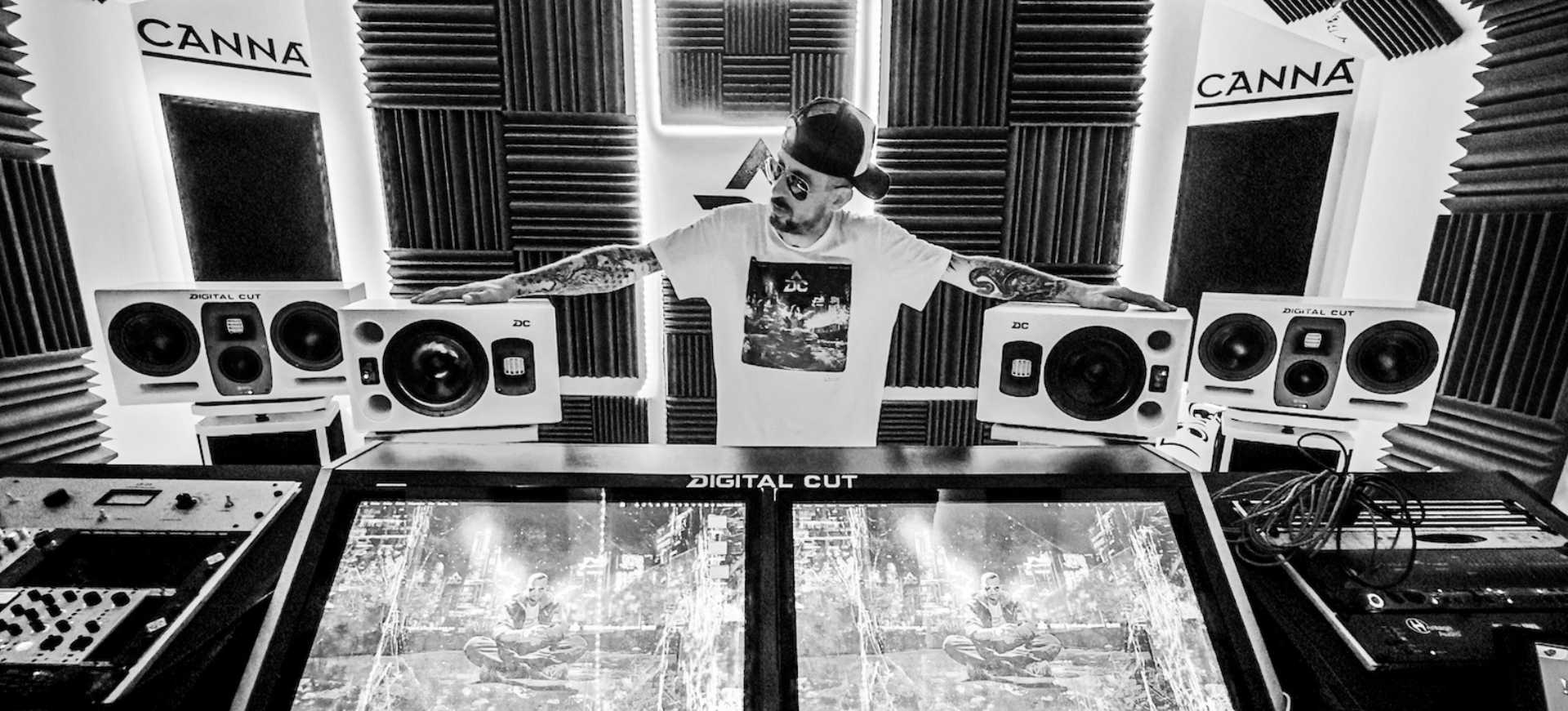
Where does the Galaxy 32 sit in your studio, and why choose it as your core converter?
I wanted a setup that reflected who I am — coherent, intentional, and unique.
That’s why I chose top-tier partners, and the Galaxy 32 became the centerpiece.
With 32 analog ins, rock-solid architecture, exceptional sound, and total versatility, it fits my workflow perfectly. It’s exactly the centerpiece I needed.

Walk us through your most-used signal path. What changed after adopting Galaxy 32?
My system around the Galaxy 32 is simple and direct. I use it via HDX, as I’ve always been a Pro Tools user. My workflow revolves around three pillars:
-
- TC6000 for effects and reverbs.
- Analog inserts through two 500-series racks (mainly WES Audio).
- Monitoring, completing the chain.
The converters are outstanding — detailed highs, defined lows, and excellent AD/DA. With its DSP and wide connectivity options, the Galaxy 32 simply has no competition for me.
For a typical vocal session, what’s your chain, and what do you commit on the way in?
My vocal chain is simple: Lewitt 1040, WES Audio Phoebe preamp, Galaxy 32.
I don’t use real-time processing — no compression, no autotune, no reverb. I want the voice natural and clean, but the monitoring comfortable.
I compose, produce, record, and mix as one unified process. Everything evolves together until the track feels complete.
When a strong sketch stalls, how do you troubleshoot it?
For me, time doesn’t exist in music. Some tracks take longer, others arrive instantly — both are fine. There are no miracle recipes. A track is an intention and an emotion.
If something isn’t right, I stay with the song until it becomes what I hear in my head — even if that means redoing parts 30 times. But when the first take is the right one, I keep it.
Respecting the energy of the moment is essential!
You told us about your upcoming studio album — Multi Verses. Could you tell us a bit more about it, when we can expect it, and is there something funny or an interesting story you can share that happened during the recording process?
Yes – I’ve just finished my first solo album, Multiverse. Super excited about it!
It features more than 25 guests, including Elephant Man, Charlie Black, Akon, El Da Sensei, Apache, Acapella, General Levy, Stranger Miller, and others. It took over three years and will be released in early 2026 — exactly 20 years after my first album.
A fun story:
In Medellín, I went to record Acapella (featured with Akon). The studio had no working cables – none. No interface power supply. Nothing.
We ended up recording in a very old-school home studio owned by Apache’s manager.
There Acapella told me, “Don’t worry. We’ll find a solution.”
And we did, and it became a great track.
What should we expect next—new collaborations, a directional shift, or a studio expansion—and how is the Galaxy-32-based workflow enabling that move?
My priority now is pushing the Multiverse album and sharing positive energy.
New collaborations are already in progress. My artistic evolution continues naturally.
With the Galaxy 32 my studio is complete now. I don’t need anything else.
To accompany this interview, I’m releasing three tracks created entirely with this setup, with all proceeds donated to support Jamaica after the recent cyclone.
It’s my way of giving back to a culture that shaped me.
Socials:
Instagram – instagram.com/digital.cut
Website – www.digitalcut.eu
Spotify – Exclusive Antelope Audio track