
Pelle is a DJ, producer, and mastering engineer based in Amsterdam and the founder of Time Item Studio. In this interview with Antelope Audio, Pelle shares how the Netherlands’ high standards shaped his approach to mastering underground electronic music, his focus on groove and dynamics, and how the Orion 32+ Gen4 sits at the heart of his hybrid workflow for club and vinyl-focused releases.
You started out as a DJ and producer before moving deeper into engineering and mastering. What were those early years like, and how did they shape the way you listen to music today?
The early years were basically just discovering the depths of the rabbit hole. I was studying at SAE Amsterdam to get better at making my own music sound better, not necessarily with a profession in mind for later. This gave me a sense of total freedom to discover and explore the craft of mixing first and not too long after mastering. It definitely made me learn to deep-listen, in other words it trained my ears to locate any problems and proceed to find a way to fix them.
After earning your Bachelor’s degree in Audio Engineering at SAE Amsterdam, what gaps did real-world club music and underground releases fill that formal education couldn’t?
Well to start, the type/genre of music that was used to teach at SAE back in those days wasn’t electronic music at all. The curriculum was built around the notion of being an audio engineer in a more traditional sense, and therefore working with acoustical music and bands for example which I didn’t feel too connected to, as that kind of music didn’t have my personal preference. After earning the degree I started working on the music of my friends as training and side-hustle and of course shaping my own stuff which slowly gave me the experience with electronic music that I didn’t get at SAE. Luckily, I did get to work on plenty of different types of electronic music due to having a wide variety of different musicians close to me and that gave me a much more fulfilling experience.
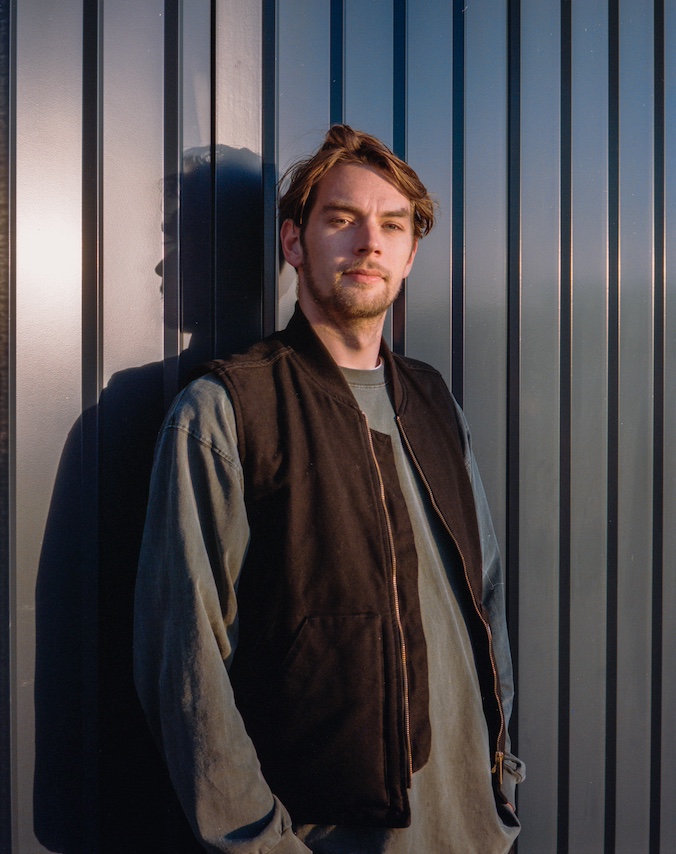
The Netherlands has one of the most influential electronic music scenes in the world, from clubs and festivals to labels and sound aesthetics. How has growing up and working within that environment shaped you as a DJ, producer, and mastering engineer—and influenced the standards you bring to Time Item Studio?
I think the scene in The Netherlands is extremely professional and reaches very high levels of production across the entire board. Thinking back to my early days, I think I learned to pull myself up to these high standards, because you’re surrounded by them when you participate in the world of electronic music here in NL. I have always wanted the creative part of working on music to be the most important thing, but the competition in The Netherlands obliges you to learn the business part of music as well, it’s equally important. So I guess the answer to the question is, it taught me to stay true to what made me pursue a career as a DJ/Producer and later Audio Engineer, but take the business part of music equally as seriously. And with mentality, the high standards on the engineering part come naturally I think. Next to this, because the Netherlands being a small country but having a lot of participants in the electronic music industry – relatively – it gave me a strong network because you see everyone you know in the record stores or clubs all the time. It feels great to work with friends a lot and bring my high standard to their music.
At what point did mastering become the main focus, and what drew you specifically to mastering electronic music rather than mixing or production?
I vividly remember a class on mastering while studying at SAE and that really resonated with my desire to make my own tunes sounds great, the reason I was at SAE in the first place and that desire grew bigger than just wanting to work on my own tracks after graduating. You could describe mastering as the final step in the production process where you’re adding that sprinkle of fairy dust in frequency balance, dynamics and loudness and if done right a track finally sounds “finished”. I think I got addicted to that feeling of achieving the stages of a finished track which made me gravitate to mastering so much.

You often speak about groove, dynamics, and subtlety in underground electronic music. From a mastering perspective, what are the most commonly misunderstood elements producers struggle with?
From a mastering perspective, dynamics and balance are the most misunderstood. Producers often chase loudness or density, which flattens the groove instead of enhancing it. Subtle timing, transient shape, and the low-end interaction are what make a track move, and once those are compromised in the mix, mastering can only correct so much. I guess that’s a thing that’s misunderstood as well often; mastering engineers can’t fix a bad mix.
Through Time Item Studio, you’ve worked on music from artists like tINI, Josh Baker, and Luuk van Dijk. When handling projects at that level, what expectations change—and what stays exactly the same?
When working at that level, the margin for error is smaller and the decisions need to be more deliberate. My clients expect consistency and transparency rather than experimentation. What doesn’t change is the approach: listen, respect the music and make choices that make the music sound good, regardless of the artist’s profile.
Time Item Studio is built around a hybrid workflow. How do you decide what should be handled in the analog domain versus digitally when shaping a master?
These decisions are being made during the mastering process really. I normally try a few different things and make choices based on what the specific music needs from what I hear and from experience. Certain plugins or outboard units work better with one genre than the other. This could also be based upon if a client wants a more dynamic sound or on the other hand a more “modern” sound. For example: if an analog compressor doesn’t suit well on a modern type record I tend to go for a digital plugin as there could be a more clinical type of compression implemented. What tools I use really depends on the music and finding out along the way.
The centerpiece of your studio is the Antelope Audio Orion 32+ Gen4. What made you choose it as the heart of your setup, and how does it support your hybrid mastering workflow on a daily basis?
Like the question states, it really is the centerpiece of my studio since it’s so versatile. I use it for mixing and mastering but also for production means. So essentially one half of the in- and outputs of the Gen 4 is set up with all my drum computers and synths for production and the other half with my outboard gear for mixing and mastering. Every outboard unit is connected on a dedicated in- and output of the Orion 32+ Gen4. In this way I can use the digital patchbay of the Orion 32+ Gen4 to go in and out of the individual units and come up with a different signal flow for every project without having to use an expensive outboard mastering console or an analog patchbay and a lot of extra cabling. I can also use plugins first and analog gear after or vice versa. The possibilities are pretty awesome. Even multiple conversions seem to be handled like a charm!

How does the Orion 32+ Gen4 influence critical decisions around depth, stereo image, and low-end translation—especially for club-focused and vinyl-bound releases?
First of all, the upgrade I made from the 32+ to the 32+ Gen4 is a pretty significant step up! The conversion is so much cleaner and more transparent. I can hear exactly what is going on, which is of course a pretty big part of the requirement for a converter. This
makes that decision making much easier for me, it flows more naturally for me with this unit. So, choices around stereo image or frequency balance are made with more confidence. I love the stereo imaging on this unit. Talking about vinyl, I can quickly identify where the issues are and process a track to maximise cutting-head efficiency, ensuring it sits as well as possible on a vinyl record because of the transparency of the conversion.
You place a strong emphasis on communication and collaboration. From reference listening to final delivery, how do you ensure the artist’s vision remains intact while still elevating the record to its full potential?
This can be pretty different with each client, one could require a bit more shaping while the other requires complete transparency while working on their music. The key part is communication really. I always love to chat with the client on what their goals are for their music, what sound or specific track they’re into; all of these things can help to get a great result. I even help with label suggestions sometimes if their music is still unsigned. Regarding the technical or practical part of mastering; it’s about making clear, minimal moves that enhance what’s already there, keeping the artist involved where needed and never losing sight of the original intent.
Socials:
Instagram – instagram.com/pelle__ph
Website – www.timeitem.net
Instagram – instagram.com/timeitem.studio