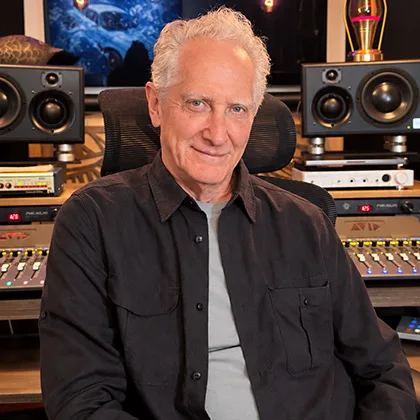
A conversation with remix pioneer John Morales on five decades of shaping dance music culture, from pioneering tape edits in 1970s New York to developing the legendary M+M Mix and working on music by artists such as James Brown, Marvin Gaye, and Chaka Khan. The interview explores the foundations of great remixing, the enduring importance of groove, dynamics, and musicality, and the lessons learned from a career spanning multiple generations of recording technology. Morales also discusses his long-standing relationship with Antelope Audio and how the Pure 2, Orion 32, and Discrete 8 ORYX continue to play a central role in his hybrid workflow today.
You’re widely recognized as one of the originators of the modern remix. Take us back to the early days—what first pulled you into DJing and editing records in New York?
As a DJ In New York in the early 70’s, I realized the records I loved to play the most were short, so I would end up buying two copies to try and extend them by mixing them back and forth as best I could. My breakthrough moment was around 1975, when I fell in love with Eddie Kendricks’ “Date with The Rain.” Since it ran only 2:40, I needed to find a way to make it longer. My first attempt at this was using a cassette deck, recording parts, trying to figure how to connect them. I learned the functions of the cassette, the distance between the record and playback head, how long it would take for the transport to engage to get seamless edits. While I got it to work the results were far from seamless and unplayable in a club for me, but I realized I was on the right track. When I heard about the SONY TC-730 reel-to-reel deck, that changed my life. I saved to buy it and worked day and night practicing the art of the edit to make mixes I could play out. I was now editing every record i was playing, creating new versions and intermixing songs.
The M+M Mix became a defining sound in disco and post-disco culture. How did that concept come together, and what made your approach different from standard mixes at the time?
The M+M Mix was born in 1980/81 by myself and my then-business partner Sergio Munzibai, whom I had met at the radio station WBLS-FM, where he was working with Frankie Crocker as assistant program director. Our first mix as “M+M” was Instant Funk’s “No Stopping That Rockin,” and nearly 650 mixes followed between 1981-1990. With both of us being Latin – I am Puerto Rican and Sergio was Cuban – we were deeply rooted in rhythm. Almost all our mixes were infused with a heavy dose of percussion: congas, bongos, cowbells, you name it, we added it. That was a big focal point to an M+M Mix during our time together. Sergio passed in 1991 and still to this day I carry on the legacy of “The M+M Mix.”

At a time when remixing was still evolving, you were already restructuring records—extending, rearranging, and enhancing them. What was your philosophy when approaching a track back then?
In the early 1980s the foundation of a M+M Mix always started with a tough and punchy rhythm track. I always made sure we had a strong kick, and a pulsating percussion bed to lay underneath the song. The concept of building a dance club record has been the same from day one to today: build a good intro that will allow a DJ easy entry into the track, a strong break and a way to get out of the record. This was essential for DJs today as it was in 1980.
You started in an era of tape edits and analog consoles. How did working with those limitations shape your discipline—and how does that translate into today’s digital workflows?
I have had the pleasure of sitting behind some iconic desks, including Neve, Trident, SSL, Harrison, and so on. At the end of the day the goal is to make the best music by any means, whether it was hanging a mic in a stairwell to get a certain reverb, gathering up 20 people to get thunderous claps, whatever it took, we did that. I learned how to use compressors, limiters, gates, it all applies today. Even if I am not cutting tape anymore and some aspects are less challenging, all that education has given me an advantage. I believe my records sound better than everyone else’s.

Over the years, you’ve worked on music from icons like James Brown, Marvin Gaye, and Chaka Khan. When handling material of that caliber, what changes in your mindset—and what stays exactly the same?
I have had the pleasure of working on music by some of the greats and for me nothing changes in my approach to mixing. You treat each song individually and my goal is always to make the best sounding record I can. My mindset never changes.
Your mixes are known for their musicality, groove and balance rather than just loudness or impact. What defines a “John Morales mix” from a technical and artistic standpoint?
A John Morales Mix is clear, dynamic and spacious. I try to create a three-dimensional space the listener can immerse themselves into, and experience the music hopefully how the artist intended it to be heard.

Few artists maintain relevance across multiple decades. What has allowed you to stay both consistent and forward-thinking as the industry—and sound of dance music—continues to evolve?
What’s kept me going is I love music and the feeling it has always given me. Since I don’t work on just one genre, it’s always exciting to start a new project and experience a new artist and how they create and put their music together. As a bit of a tech head I always try to be aware of the latest cutting edge gear, as long as it allows me to be able to do the things i feel are required to get the best from each track.
You’ve been a long-time user of our devices. How have they integrated into your current workflow, and what role do they play in maintaining precision and musicality in your mixes? Additionally, what Antelope gear currently lives in your racks?
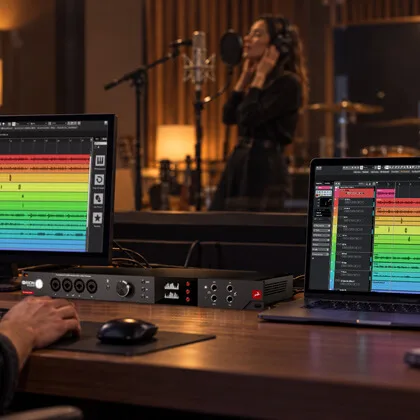
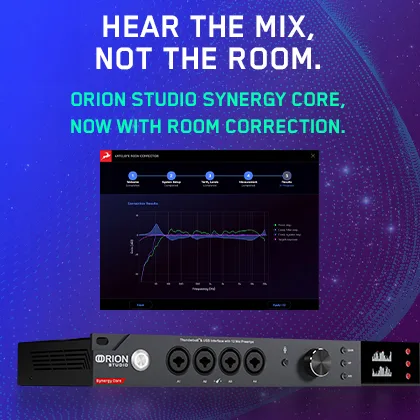
I still find a way to incorporate analog gear into my mix chain. I guess that’s the old school in me. I still believe it sounds better. At the heart of my studio are my Antelope Pure 2, Orion 32, and Discrete 8, all nicely tied together with Antelope’s amazing clock. I run all my mixes out to the Pure 2 and back into my Cubase DAW, all my mic and guitars flow through the Discrete 8, and my Orion 32 manages my tape machines. Long before becoming an Antelope Artist, I was a user and fan… the Antelope gear just sounds better.

From a technical standpoint, how important are conversion quality, clocking, and headroom in your process today—and how do they influence the final result?
Sound quality is always my top priority and running my mixes through the Pure 2 gives me the ability to push them, because of the quality of the converters and headroom in the Pure 2 system.
Looking at today’s producers and remixers, what do you feel is often missing—and what advice would you give to those trying to build a lasting career in music?
Unfortunately, in today’s fast paced world, nobody takes the time to educate themselves about how to work with sound, musicians and instruments. In the dance community, most people are working with pre-recorded loops that don’t afford you the ability to work with the sounds and maximize their individual potential. With AI it’s even worse. I’ll continue to work with musicians to keep that art moving forward. But educating yourself about what you do is most important.
Follow John Morales:
Website – johnmoralesmix.com
Spotify – open.spotify.com/artist/7ldgPqwe1wCb25bKqeuryy